

A Quiet Revolution in Coaching
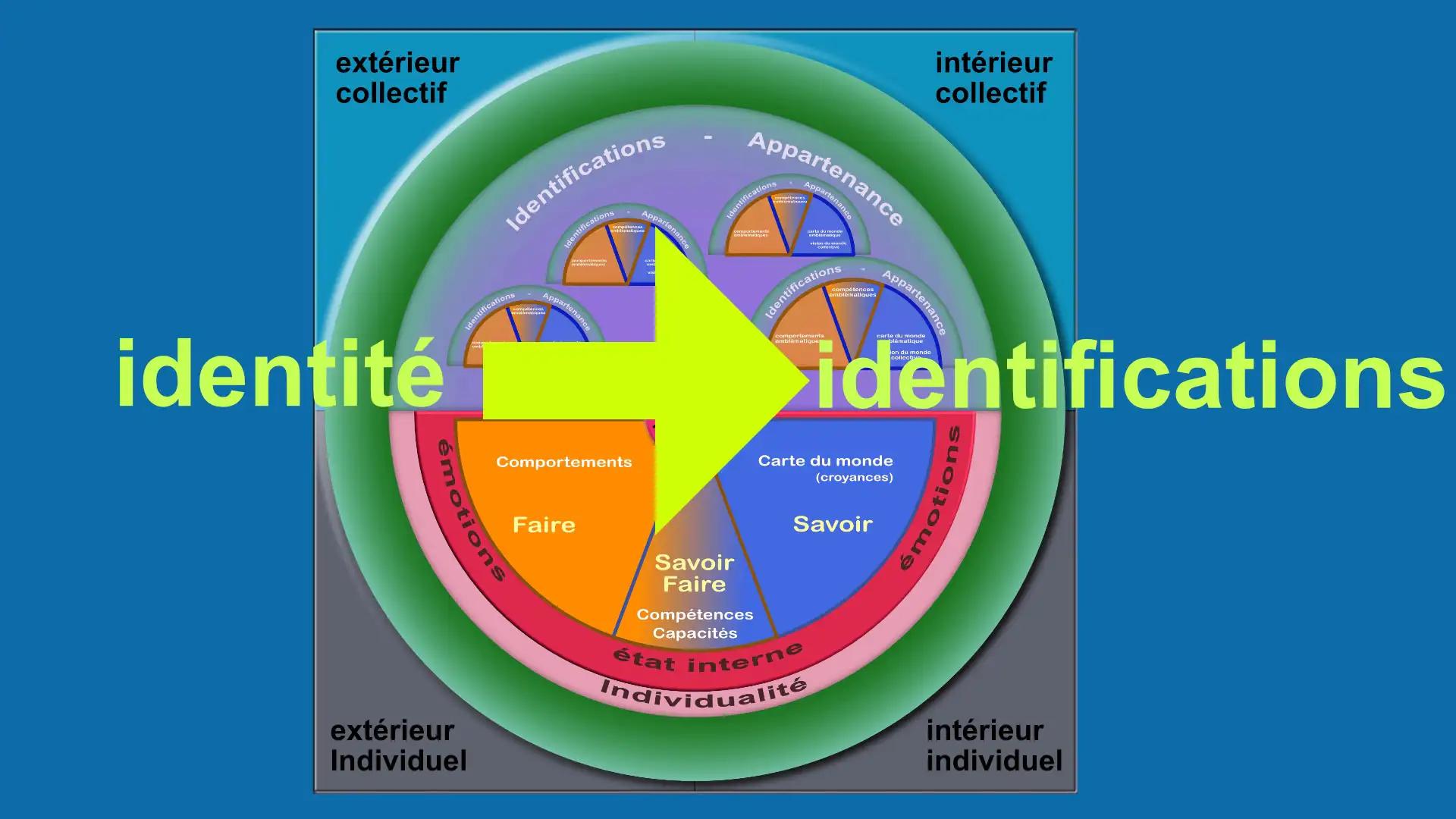
The models we work with largely determine how effective our coaching turns out to be. For many coaches and NLP-trained practitioners, Robert Dilts’s pyramid of logical levels has become an indispensable tool. And when we place a problem at the “identity level,” we brace ourselves: this will be a far bigger job than a problem at the level of behavior.
Past the trap of a fixed identity
How many times have we heard, or thought, “That’s my identity, that’s just how I am”? The idea puts up an invisible and very effective barrier to change. No surprise there. If something belongs to our deepest being, how could we transform it without touching the person’s essence?
That is where the Experience Matrix offers a way out. Rather than treating identity as a fixed, monolithic essence, it introduces identifications: a set of dynamic relationships we maintain with various groups, roles and models.
Identifications are multiple and flexible
The identification approach recognizes that we do not simply “are” something. We identify, to varying degrees, with social, professional, cultural or archetypal categories.
In practice, when a client says “I’m shy,” we can treat the statement not as an unchanging truth but as a particular identification that:
- varies in intensity from one context to another
- expresses itself differently over time
- coexists with other identifications, sometimes contradictory ones
- was built through specific experiences and specific models
A lever within reach
This changes our approach to change itself. Instead of trying to modify identity, a task that can look impossible, we can work on:
- the intensity of an identification: weakening a limiting one, strengthening a resourceful one
- the contexts that activate it: recognizing which situations bring certain identifications to the fore
- the quality of the relationship: exploring whether the identification is positive, neutral or negative for the person
- the emblematic behaviors: modifying the behaviors attached to certain identifications
- the collective worldview: questioning the beliefs that come with the group one identifies with
In practice
Marie, a senior executive, describes herself as “fundamentally a perfectionist.” That self-definition leaves her chronically stressed and exhausted.
Under a classic reading of the logical levels, this looks like an identity problem, hard to shift. The Experience Matrix lets us come at it differently:
- we explore which groups and models Marie identifies with, perhaps authority figures from her childhood, perhaps a particular corporate culture
- we examine the emblematic behaviors and the worldview attached to those identifications
- we work on her relationship to them, on their context and on their intensity
- we introduce other identifications she might take up, such as identifying with professionals who are both balanced and effective
The result is transformation work that becomes tangible, gradual and within reach, a long way from the feeling of having to “change who she fundamentally is.”
An invitation to practitioners
For coaches and practitioners, the Experience Matrix opens intervention options that are more supple and more effective. It gets past the limits built into a fixed view of identity, and it respects how complex human experience actually is.
The Experience Matrix is more than a tool. It changes how we approach the deepest blocks our clients bring us.