

Identity Lives in Time
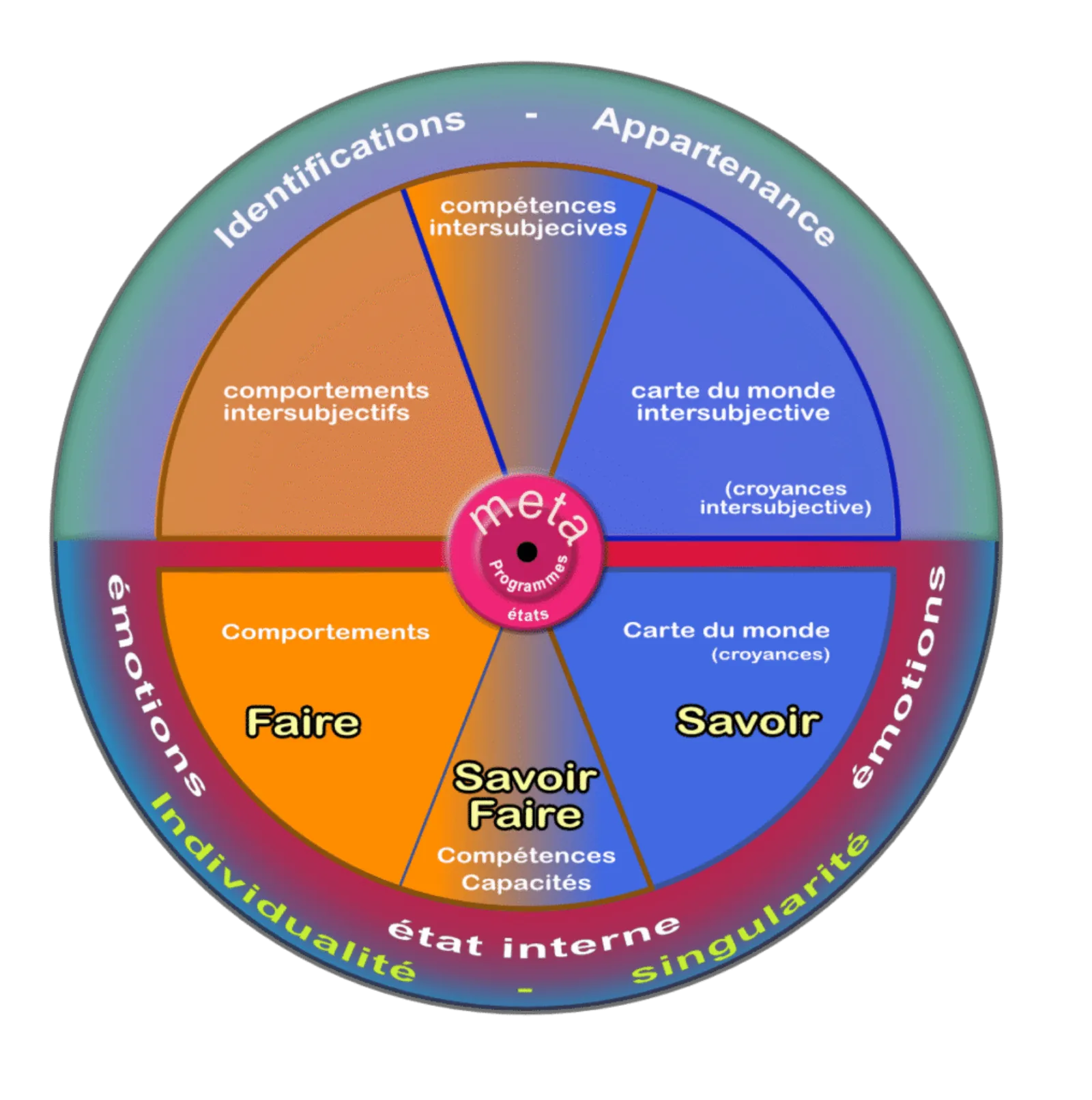
Reconceiving identity is one of the Experience Matrix’s principal departures from Dilts’s model of logical levels. It answers real theoretical limits, and it opens practical ground for personal development and coaching.
The identity level as Dilts proposes it is intuitively appealing, and it runs into trouble in practice. By positioning identity as a distinct level, hierarchically above the others, the model implies a stable and unchanging essence of the self. That framing can hold change back rather than enable it, reinforcing limiting beliefs of the “that’s just how I am” variety.
The Matrix takes a different route. Identity no longer appears as a separate level. It emerges as the dynamic product of our personal history over time, showing itself in the singular way each person lives, interprets and integrates their experiences across time. That view aligns with recent findings in neuroscience and psychology on the continuing plasticity of the brain and the constructed nature of our sense of self.
In this conception, identity becomes the expression of our unique temporal signature — the particular way we have lived our experiences, developed our capabilities, formed our beliefs and chosen our identifications. It is no longer a fixed structure determining our behavior, but a narrative thread in constant evolution, emerging from the dynamic interaction of all the spaces of the Matrix.
The practical gains are considerable. Freeing identity from a fixed position in a hierarchy opens new possibilities for change. Practitioners can work more effectively by exploring how a client’s personal history continues to build itself through their current experiences, rather than trying to modify some hypothetical underlying essence.
It also makes deep change easier to understand and to support. Our sense of identity emerges naturally from the way we integrate our experiences over time, and stays open to evolution. That is particularly freeing for people who had felt imprisoned by an identity they perceived as immutable.
The temporal dimension becomes the ground on which identity unfolds — not a fixed entity waiting to be discovered, but a living narration to be written and rewritten. It opens the way to developmental work that is more fluid and more effective, and consistent with what we now understand about human plasticity and change.